
Rotational Grazing
Flexible Rail Fencing for Horse Pasture and Rotational Grazing Management
Improving pasture utilisation and planning boundaries for horse movement
Project details
- Extending the grazing period
- 45days
- Improving the carrying capacity of grasslands
- 30%
- Pasture Division
- District 8
Overview
A professional equestrian farm with extensive natural pastureland needed to support turnout, daily exercise, and pasture maintenance for its horses. Previously, horses remained in the same grazing area for extended periods, resulting in localized turf damage, overgrazing, and muddy ground during wet seasons. Traditional timber fencing also required frequent maintenance and offered limited flexibility for adjusting paddock layouts.
To improve pasture utilization while providing horses with safer, clearly defined boundaries, the farm upgraded its grazing areas with a flexible rail fencing system.
Solution
Based on a fixed perimeter fence, the main pasture was divided into several rotational grazing paddocks, connected by dedicated access lanes. This enabled staff to move groups of horses according to forage recovery, seasonal conditions, and herd size.
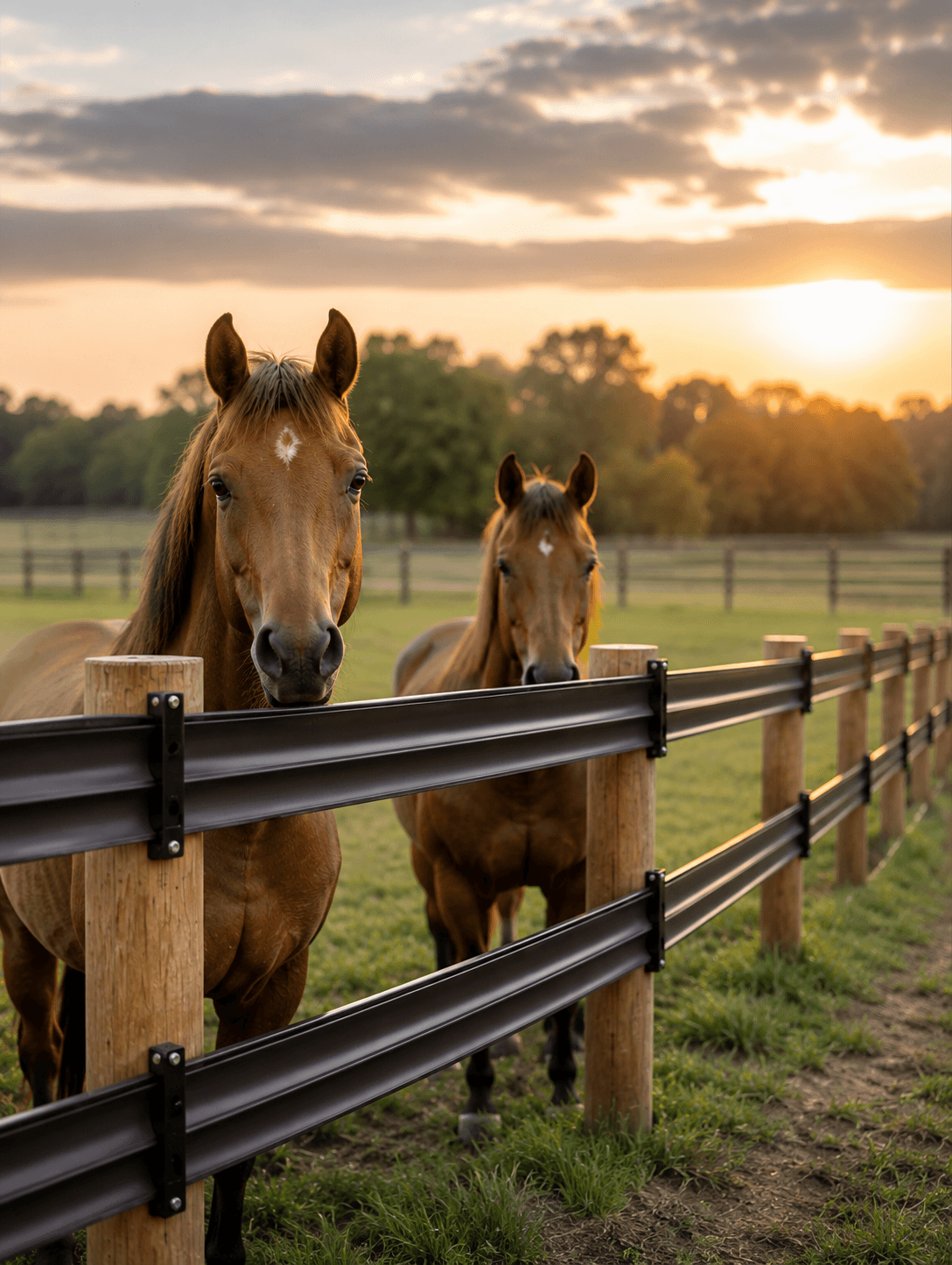
The fencing features smooth, wide flexible rails, retaining the clean appearance of traditional post-and-rail fencing while reducing risks associated with cracked timber, broken boards, and sharp edges. In high-contact areas, electrified rail options were incorporated to help establish clear boundaries and discourage horses from leaning on, chewing, or damaging the fence.
Results
With a “divide, graze, and rest” management system, the farm can adjust each paddock’s use based on grass condition, season, and horse activity levels:
• Active paddocks provide turnout and grazing space. • Resting paddocks are given time to recover, helping reduce overgrazing and excessive trampling. • Paddocks near the stable can be used for short-term turnout, observation, or separating horse groups. • Staff can carry out reseeding, mowing, manure removal, and routine inspections more efficiently.
The flexible rail fencing creates clear boundaries for each turnout area. When horses run, play, or become startled, the fence provides a degree of flexibility upon contact. Compared with traditional timber fencing, it also reduces the need for repainting and replacing damaged boards, making ongoing maintenance more efficient.
Customer Feedback
“Rotational grazing is not simply about dividing a pasture—it is about giving every section of grassland time to recover. Flexible rail fencing has made our paddock layout more organized and our daily management more intuitive. Whether we are moving horses or resting a pasture, the entire operation now runs with much greater clarity and confidence.”
Suitable Applications
This solution is ideal for equestrian centers, breeding farms, racing and training facilities, horse boarding operations, leisure riding farms, and other properties that require group separation, managed turnout, and rotational grazing.
Key outcomes
0
Number of times painted per year
0
Number of replacements due to breakage
30%
Increased grass cover
Call to action
Build Your Fence System
Talk with our team about your property, your layout, and the right system combination for safer, longer-lasting equine fencing.