
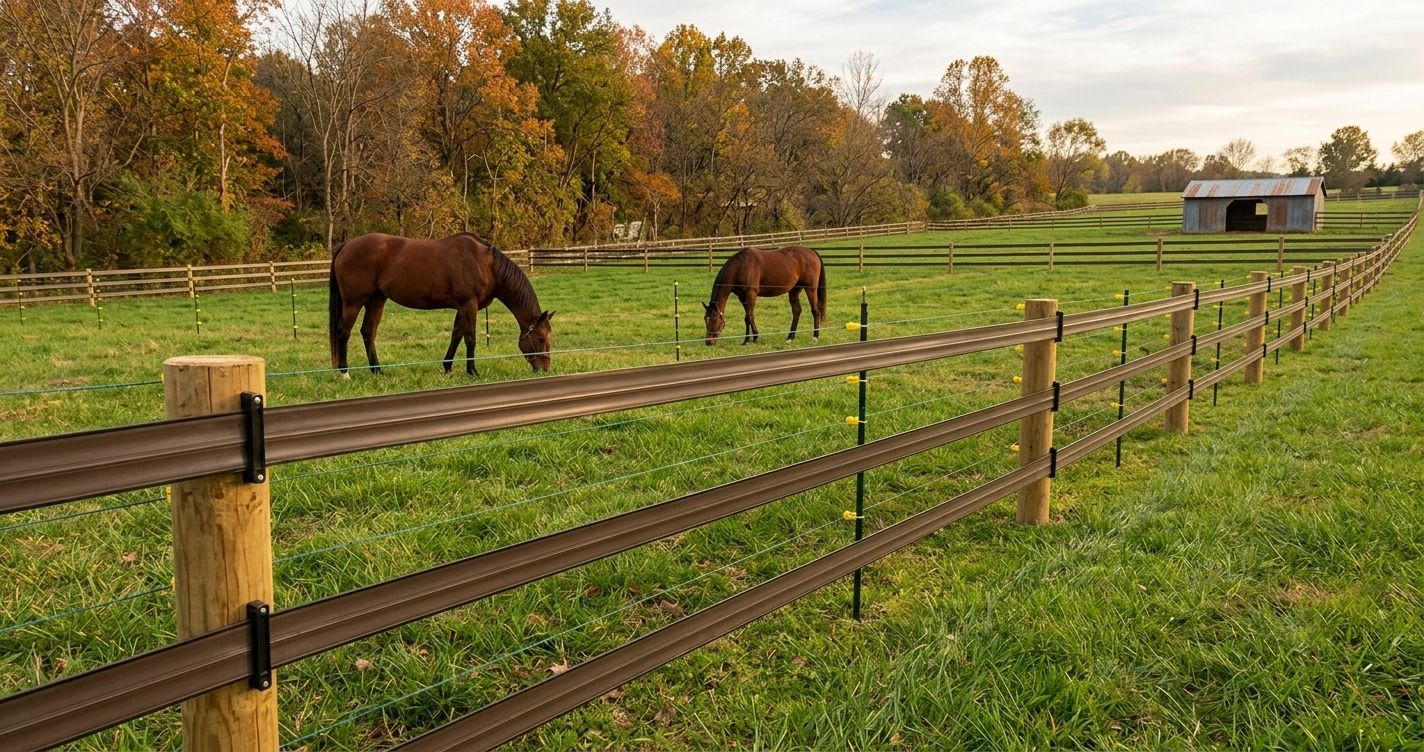
Flexible Rail Horse Fencing: The Safer, Low-Maintenance Alternative to Traditional Wood Fences
July 20, 2026 ·
Why More Horse Owners Are Choosing Flexible Rail Fencing Over Traditional Wood Fences
When you manage a horse farm, ranch, or equestrian facility, your fence is much more than a boundary. It is a safety system that protects your horses, your property, and your investment.
For many years, traditional wood fencing has been one of the most common choices for horse owners. Its natural appearance and classic style make it popular among farms and ranches. However, after years of exposure to weather, impact, and daily maintenance, many horse owners begin to face the same challenges: rotting posts, broken rails, frequent repairs, and potential safety risks.
This is why more equestrian professionals are turning to flexible rail horse fencing as a safer and more durable alternative.
Unlike rigid wood fences, flexible rail fencing is designed to absorb impact, reduce injury risks, and provide long-term performance with minimal maintenance. Whether you are building a new horse paddock or replacing an old fence system, flexible rail fencing offers a modern solution designed around horse safety.
The Problems With Traditional Wood Horse Fencing
Wood fencing has been used around horse properties for generations, but it also comes with several limitations.
1. Wood Fences Can Break Under Impact
Horses are powerful animals. When they become frightened, excited, or playful, they may run into fences with significant force.
A traditional wood rail has very limited flexibility. When a horse impacts a rigid wooden structure, the fence may:
Crack or split Break into sharp pieces Create dangerous openings Require immediate replacement
Broken wood pieces and exposed nails can create serious hazards for horses.
For horse owners, fence safety is always a priority. A fence should not only keep horses contained but also help reduce injury risks during unexpected situations.
2. High Maintenance Costs Over Time
A wooden fence may look beautiful when first installed, but maintaining it requires continuous effort. Depending on your local climate, you may need to regularly: • Replace damaged boards • Repair cracked rails • Treat the wood against moisture • Repaint or stain the surface • Check for loose nails and fasteners Over several years, these maintenance tasks can become expensive and time-consuming. Your time is valuable. Instead of spending weekends repairing fences, you should be able to focus on managing your horses and improving your property.
3. Weather Damage Reduces Fence Lifespan
Horse farms are exposed to outdoor conditions all year round. Rain, snow, humidity, sunlight, and temperature changes can gradually weaken wood materials.
Common problems include:
Wood rot caused by moisture Warping and cracking Insect damage Color fading
Even high-quality wood requires regular maintenance to maintain its appearance and strength.
What Makes Flexible Rail Horse Fencing Different?
Flexible rail horse fencing is designed specifically for equestrian applications. It combines strength, flexibility, and safety to create a fencing system that performs better under real farm conditions.
The key difference is the ability of the rail to absorb and distribute impact.
Instead of creating a hard barrier, flexible rails provide controlled movement when pressure is applied.
This design helps create a safer environment for horses while reducing damage to the fence system.
1. Enhanced Horse Safety With Impact Absorption
Horse safety is the most important reason many owners choose flexible rail fencing.
When a horse accidentally runs into a flexible rail fence, the system can absorb part of the impact energy and allow controlled movement.
Compared with rigid materials, flexible fencing helps reduce:
Sudden impact force Sharp breakage hazards Serious fence damage
This makes flexible rail fencing an ideal choice for:
Horse paddocks Training areas Riding arenas Breeding farms Boarding facilities
A safer fence gives you greater confidence that your horses are protected during daily activities.
2. Lower Maintenance and Long-Term Cost Savings
One of the biggest advantages of flexible rail horse fencing is reduced maintenance.
Unlike wood fences, flexible rails are designed to withstand outdoor conditions without frequent repairs.
You can benefit from:
No painting requirements No wood rot problems Less replacement work Easier cleaning and inspection
Although the initial investment may vary depending on your project, the long-term ownership cost is often lower because you spend less time and money on repairs.
A quality horse fence should provide value for many years, not create constant maintenance work.
3. Durable Performance in Different Weather Conditions
Horse farms are located in many different environments, from hot and dry ranches to cold and wet regions.
Flexible rail fencing is designed to maintain performance in challenging outdoor conditions.
High-quality flexible rails typically offer:
UV resistance Weather durability Strong structural performance Long service life
This makes them suitable for farms and ranches that need reliable fencing throughout the year.
4. A Cleaner and More Professional Farm Appearance
Your fence is one of the first things people notice when they visit your property.
A damaged or aging wood fence can affect the overall appearance of your farm.
Flexible rail fencing provides:
Clean modern lines Consistent appearance Professional equestrian style Better visual appeal
Whether you operate a private horse ranch or a professional equestrian facility, a well-designed fence improves both safety and property value.
How to Choose the Right Flexible Rail Horse Fence System
Before purchasing a flexible rail fencing system, you should consider several factors.
1. Understand Your Application
Different areas may require different fencing solutions.
For example:
Horse paddocks require safe and durable fencing Training arenas need strong impact resistance Large ranch boundaries may require cost-effective solutions
Understanding your specific needs helps you choose the right system.
2. Consider Fence Height and Layout
The ideal fence height depends on:
Horse breeds Property layout Usage requirements Local regulations
A professional fencing supplier can help you design the correct layout for your farm.
3. Choose Quality Materials
Not all flexible rail fences are the same.
A reliable system should provide:
Strong rail structure Durable posts Stable connections Long-term outdoor performance
Choosing quality materials ensures your fence continues protecting your horses for years.
Upgrade Your Horse Property With Flexible Rail Fencing
Your horses deserve a fencing system designed with their safety in mind.
Traditional wood fences may look familiar, but modern flexible rail horse fencing provides a smarter solution for today’s horse owners.
With improved impact resistance, lower maintenance requirements, and long-lasting durability, flexible rail fencing helps you create a safer, cleaner, and more efficient horse property.
Whether you are replacing an old fence or planning a new equestrian facility, investing in a flexible rail horse fencing system can help protect your horses while saving you time and maintenance costs in the future.
FAQ About Flexible Rail Horse Fencing
1. Is flexible rail horse fencing safer than wood fencing?
Yes. Flexible rail horse fencing is designed to absorb impact and reduce the risk of sharp breaks compared with traditional wood rails. This makes it a safer option for areas where horses may run into or lean against the fence.
2. How long does flexible rail horse fencing last?
The lifespan depends on material quality, installation, and environmental conditions. High-quality flexible rail fencing is designed for long-term outdoor use and can provide many years of reliable performance with minimal maintenance.
3. Does flexible rail fencing require regular maintenance?
Compared with wood fencing, flexible rail fencing requires much less maintenance. You typically do not need regular painting, staining, or replacement caused by rot and cracking.
4. Can flexible rail fencing be used for large horse farms and ranches?
Yes. Flexible rail fencing is suitable for a wide range of applications, including private horse farms, breeding facilities, riding arenas, paddocks, and large ranch properties. It can be customized according to your layout and specific requirements.
Call to action
Build Your Fence System
Talk with our team about your property, your layout, and the right system combination for safer, longer-lasting equine fencing.