
Horse Fencing Guide
Horse Fence Maintenance Schedule: What to Check Every Season (and What You Can Skip)
September 22, 2026 · 7 min
A horse fence doesn't fail all at once. It fails in small ways. A post that loosens after a wet spring. A wire that loses tension through a hot summer. A gate hinge that rusts through a winter. Each one seems minor until the day your horse is standing on the wrong side of it.
The good news is that most fence failures are preventable with a simple seasonal routine. This guide walks you through what to check in spring, summer, fall, and winter, how often to walk the line, and why a flexible rail system like migaequine MigaRail cuts most of these tasks off your list entirely.
How Often Should You Inspect a Horse Fence?
Walk your entire fence line twice a year with a checklist, once in spring and once in fall. Between those deep inspections, do a quick visual scan weekly. It takes ten minutes if you make it part of another chore, like filling water troughs.
Then there are the unscheduled checks. After any major storm, high winds, or a heavy freeze-thaw cycle, walk the line again. Winter storms snap branches. Spring floods soften the ground around posts. A thirty-minute walk after bad weather catches most problems while they're still cheap to fix.
Horse fence maintenance isn't about fixing what's broken. It's about catching the small stuff before your horse finds it first.
Spring: The Deep Inspection
Spring is your most important inspection of the year. Winter does quiet damage, and spring is when you find it.
Check for post movement. Freeze-thaw cycles push posts upward and sideways. Grab each post and wiggle it. If it moves, it needs reseating. A post that wobbles under your hand won't hold when a 1,000-pound horse leans on it.
Test wooden posts for rot. Tap each wooden post with a hammer or the heel of your hand. A solid post sounds solid. A hollow sound or soft, crumbly wood means rot has set in below ground level, where you can't see it. Rot at ground level is the number one killer of wood fences.
Look for loose fasteners. Winter's expansion and contraction works nails and screws loose. A protruding nail is an accident waiting to happen. Collect every loose nail and staple as you go so none of them end up in your pasture.
Check wire tension. Loose wire sags, and sagging wire invites leaning, rubbing, and pawing. Stretch any slack runs back to proper tension. If you're re-tensioning the same section every spring, that section has a deeper problem.
Test your electric fence voltage. If you run electric fencing, test it with a voltmeter at multiple points: near the energizer, at the midpoint, and at the far corner. For horses, you want a minimum of around 3,000 volts on the line. Big drops between test points mean current is leaking somewhere. Check your insulators for cracks and your ground rods for corrosion while you're at it.
Clear vegetation early. Grass grows fast in spring, and grass touching an electric wire drains the charge. Trim everything within about two feet of the line before growth season gets going.
Summer: Watch the Wear Points
Summer is gentler on fences, but it has its own attack patterns.
Watch for UV damage. Sunlight degrades plastics and vinyl. Look for fading, chalking, or small cracks, especially on south-facing runs that take the most sun. Vinyl that has gone brittle is one hard impact away from shattering.
Inspect wood for dry rot and insects. Hot weather cracks and splits timber. Carpenter bees and termites are most active in summer. Check horse-height boards for chew marks while you're there. Chewing isn't just cosmetic damage. It weakens the rail and teaches the horse that the fence is negotiable.
Keep vegetation down. This is your main summer job on electric lines. Weeds and vines grow fast after summer rains, and every strand of grass touching a hot wire bleeds voltage. If you're trimming the same stretch every two weeks, consider a gravel strip or a targeted herbicide band under the line.
Watch where horses congregate. Horses lean, rub, and paw at the same spots: near gates, near water, and along fence lines facing buddies in the next paddock. Those pressure points wear out first. Check them more often than the rest of the line.
Fall: Prepare for Weather
Fall maintenance is about getting ahead of winter, not fixing summer damage.
Cut back overhanging branches. Every branch hanging over your fence line is a branch that will come down in an ice storm. Clear them now, while the weather still cooperates. This matters more than it sounds. Downed limbs don't just break rails. Some of them, like red maple and cherry, are toxic to horses if the horses browse the wilted leaves.
Clear debris from post bases. Wet leaves piled against posts trap moisture and speed up rot and rust. Rake them away before the wet season starts.
Re-tension wire before winter winds. Wire shrinks in cold weather and any existing slack becomes worse. Tighten runs now so winter winds don't turn a loose line into a snapped one.
Treat wood if it's due. If your wood fence hasn't been stained or sealed in the past couple of years, fall's moderate temperatures are a good window. Sealing keeps winter moisture out of the grain, and moisture is what freezes, expands, and splits boards.
Check gates and hardware. Cold causes metal to contract. Adjust gate hinges and latches in fall so gates still close properly in winter. A gate that doesn't latch cleanly is one bored horse away from an escape.
Winter: Inspect After Every Storm
In winter, your job shifts from scheduled maintenance to storm response.
Walk the line after storms. High winds, ice, and heavy snow break branches, snap boards, and loosen posts. Look for broken boards, slack wire, wobbly posts, sagging gates, and downed limbs on the fence.
Watch for frost heave. Freeze-thaw cycles push posts up out of the ground. A post that heaved will pull the attached rails out of line and change your tension. Reseat heaved posts before the movement stresses the rest of the section.
Test electric fences in the cold. Snow can bridge a fence line to ground and drain the charge. Deep snow also effectively lowers fence height. Test the line monthly through winter with a voltmeter, and clear snow bridges where they form.
Keep horses off the fence. Bored winter horses test fences more. Hay stations placed away from fence lines and adequate turnout space reduce leaning and pacing pressure while the ground is frozen and the fence can't flex.
The Maintenance Log Nobody Keeps (But Should)
Keep a simple notebook or phone note with three things: voltage readings, repair dates, and what you fixed. After a year, patterns show up. Maybe your south fence loses tension every winter. Maybe one corner post heaves every spring. Patterns like that point to root causes, and fixing the root cause beats fixing the same symptom four times.
What You Can Skip with a Flexible Rail System
Here's where the checklist gets shorter. A migaequine MigaRail installation removes most of the recurring work you just read about.
No staining or sealing. The UV-stabilized PE polymer coating never needs paint. The UV testing we published earlier showed the coating holds color and integrity through a decade of simulated exposure, so there's no annual sealant cycle and no rot to tap for.
No re-tensioning cycle. MigaRail holds tension across seasons. The system's working range of -40°C to +60°C means the rail you tensioned at install stays tensioned through freeze-thaw and summer heat. You're not stretching wire every spring.
No rot, no rust, no chew damage. There's no wood to rot at ground level and no exposed steel to corrode. The polymer rail doesn't splinter when a horse chews on it, either, though you should still discourage the habit.
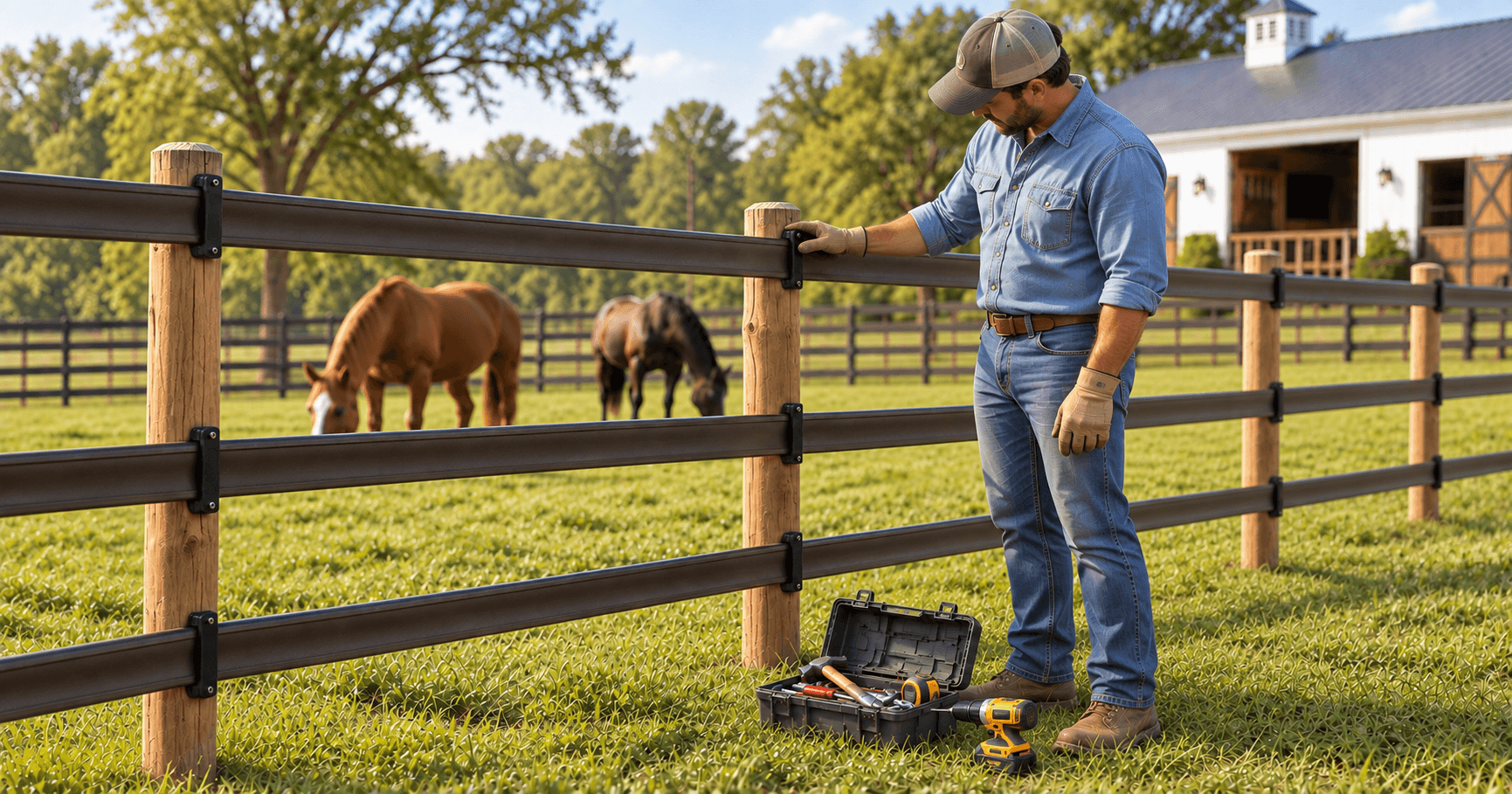
What you still check. Even a flexible rail system deserves your twice-yearly walk. Check that posts are still tight in the ground, that corner bracing hasn't shifted, and that gate hardware moves cleanly. Those are structural checks, and they take minutes. The difference is you're inspecting a system that doesn't decay, not maintaining one that does.
Frequently Asked Questions
How often should you inspect a horse fence?
Do a full perimeter walk twice a year, in spring and fall, plus a quick visual scan weekly. Add an extra walk after any major storm, heavy snow, or freeze-thaw event, since that's when posts shift and boards break.
What voltage should a horse electric fence be?
Most sources recommend at least 2,000 to 3,000 volts for horses, with 3,000 volts as the working minimum for a dependable deterrent. Test at several points along the line, not just at the energizer. Consistent readings mean a healthy fence. Big drops mean a leak.
What is the most common horse fence failure?
Post failure at ground level. Wooden posts rot just below the soil line where you can't see it, and frost heave pushes posts out of plumb. A post that looks fine can be hollow an inch below grade, which is why the tap test belongs in every spring inspection.
Do flexible rail fences need maintenance?
Far less than wood, wire, or vinyl. A flexible rail system like MigaRail needs no painting, staining, sealing, or seasonal re-tensioning. You still walk the line twice a year to check posts, corners, and gates, but there's no material decay to manage.
Wrapping Up
A maintenance schedule isn't glamorous, but it's the difference between a fence that lasts decades and one that fails on a random Tuesday. Walk the line twice a year with a checklist. Scan it weekly. Check it after storms. Test the voltage if you run electric. And if you're tired of staining, sealing, and re-tensioning every season, that's the point where a flexible rail system stops being a purchase and starts being a shortcut.
Call to action
Build Your Fence System
Talk with our team about your property, your layout, and the right system combination for safer, longer-lasting equine fencing.